
Akela's Leadership
The Jungle BookThis flow traces Akela's rise, decline, and final preservation of the Pack's moral memory.
increasing Bearing strength in each event
 decreasing
Bearing strength in each eventdecreasingStrong Leader
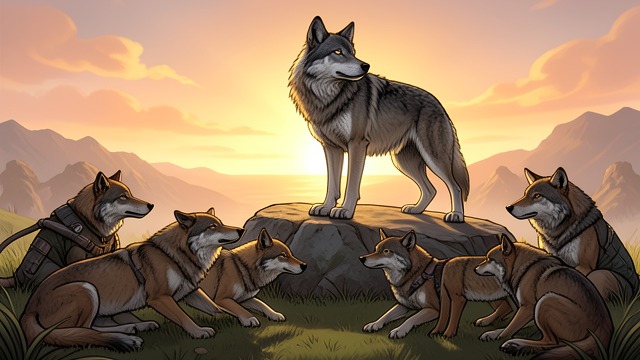
Authority at Council Rock
Order and Experience
Akela leads the Seeonee Wolf Pack through strength, cunning, and knowledge of human traps.
Institutional Stability
His authority allows the Pack to judge Mowgli according to law rather than panic. Leadership initially appears as the structure that makes mercy possible.
Aging Authority

Weakness Becomes Political
Declining Hunts
Akela grows less able to bring down prey, and younger members begin to treat age as disqualification.
Predatory Politics
Shere Khan exploits this weakness, turning private anxiety into a campaign against both Akela and Mowgli.
Engineered Failure
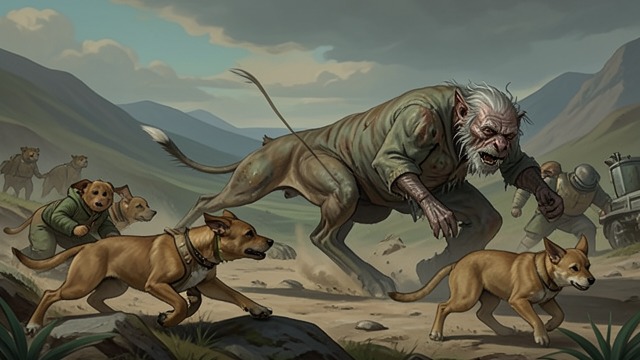
The Staged Hunt
A Manipulated Test
The younger wolves drive Akela toward an untried buck so that his failure will appear natural.
Law as Weapon
The Pack uses its own rule against its leader. The episode shows how a legal system can be hollowed out by ambition while retaining the appearance of fairness.
Refusal of Mercy

The Dead Wolf's Speech
Accepting the Verdict
Akela acknowledges that the Law permits his death and offers no physical resistance.
Moral Resistance
He instead exposes the Pack's cowardice and promises to die without fighting if Mowgli is spared. His sacrifice preserves the ideal of the Free People even as the institution collapses.
Final Recall

Calling the Wolves Back
Memory Reasserted
Akela calls the old command to look well, and the diminished Pack answers from habit.
A Lost Office
The wolves ask him to lead again, but Bagheera warns that their old madness may return. Akela's authority survives as memory, not restoration.
when Mowgli first joins the Pack
during Mowgli's adolescence
the night before the final council
at the final council
after Shere Khan's death
